In its early days almost all the breadwinners in The Religious Society of Friends were small farmers, shopkeepers, and the like. As “non-conformists”, Quakers were excluded from universities. Professions such as medicine or law were not open to them, and they were debarred from many public and civic offices. For this reason, many Quakers took up professions in trade or industry, where they often prospered due to their basic integrity.
By the 19th century, Quakers were mostly middle and upper-middle class tradesmen, merchants, bankers etc.
Quaker Businesses in Ulster
In Ulster the land settlement programme at the time of the plantation brought many from Britain as tenants of small farms, as tradesmen and shopkeepers. It was mainly from this group that the Society of Friends in Ulster drew its members. As the linen industry grew, Friends became involved and are credited for developing the chemical bleaching of linen using vitriol manufactured at Lisburn and Moyallon. The modified power loom, allowing more complex patterns to be woven into damask linen was designed and constructd by Henry Barcroft of Bessbrook.
Quaker Businesses in Ireland – 18th and 19th Centuries
The enormous growth in the size of companies in the 1800s and the first half of the 1900s, and the management and financial resources required, made it increasingly difficult for traditional family businesses to survive. Nowadays any of the well known Quaker firms that did survive are part of larger groups no longer connected with Friends.

Types of Quaker Business in Ireland
The types of business, and the names of some of the Irish Quaker families that owned and ran them, make interesting reading.
- Banking – Hoare, Pike, Newenham, Pim
- Milling – Shackleton, Grubb, Goodbody, Davis
- Engineering – Jacob, Grubb, Edmundson, Wigham
- Shipping, building and owning – White, Malcomson, Beale, Pim, Pike, Lecky, Richardson. Walpole, Bewley
- Linen, Cotton, and Jute spinning and manufacturing – Malcomson, Richardson, Sinton, Uprichard, Hancock, Greer, Greeves, Bell, Goodbody, Douglas, Allen, Walpole
- Cut glass – Penrose, Gatchell, White
- Jam manufacturing – Lamb, Peile
- Structural steel – Pearson
- Railways – Pim, Haughton
- Tobacco – Goodbody
- Brewing – Strangman
- Cafes – Roberts, Bewley,Goodbody
- Biscuits – Jacob, Marsh
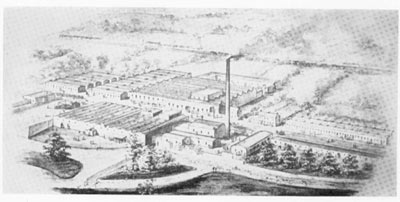
The Goodbody Factory, Clara, Co. Offaly
Quaker Success in Business
Why were Friends successful in this way? Modern business has become so competitive, and the profit motive so pervasive, that it is hard to imagine the strong influence their religious convictions exerted on them. They simply believed it was right to offer a good product for a fixed, and reasonable, price. They believed in honesty and integrity in all their dealings. A simple life-style, and not over-extending themselves financially, allowed them to build up their resources. Strict rules governing business methods for members meant that they were increasingly trusted with money, and some became bankers. Various laws, including those related to swearing oaths, prevented Friends from attending university and joining the professions for a couple of centuries, so they put their energies into business instead. Friends were good employers, and this led to a loyal workforce.

Also, and importantly, the structure of The Society of Friends from its earliest days, with a system of representatives from Meetings regularly visiting other Meetings, often in other parts of the country, created a network of relationships between like minded individuals and families. It was natural, therefore, that they would hear about, support, participate in and emulate each other’s ventures.
See also Irish Quaker Firms and Books.
 quakers-in-ireland.ie