Category Archives: News and Events

STATEMENT ON THE CRISIS IN UKRAINE

Statement on the Crisis in Ukraine

Religious Society of Friends (Quakers) in Ireland

We feel profound sadness at the acute mental and physical suffering which the people of Ukraine are undergoing as a result of the military invasion initiated by the government of the Russian Federation.

We call for a cessation of violence, under the terms of the Geneva convention, which has been signed by both Russia and Ukraine.

As Quakers, we believe that God’s Spirit resides in all, and violence and war are never the only option. We implore the Ukrainian and Russian governments to pursue peaceful negotiations with open and creative minds.

Many people in Ukraine, Russia and around the world are hoping and praying for a peaceful outcome to this conflict. We hold in the Light all those in the Ukraine whose lives are in danger and disrupted by fear, the refugees fleeing from Ukraine, the many Russians who are shocked and dismayed at the course their government has taken, the decision makers, the soldiers, and all those courageously working for peace.

Religious Society of Friends (Quakers) in Ireland

28 February 2022

EcoQuakers Ireland

EcoQuakers Ireland is a committee of Ireland Yearly Meeting that supports Quaker Meetings in their efforts to live peacefully and sustainably.

EcoQuakers believe that care for the environment is an integral part of the Quaker tradition and links closely with the Quaker testimonies of peace, simplicity, truth and equality.

To learn more about the work of EcoQuakers Ireland and contact details for the Convenor and Committee, visit their page on this website.

Would you like to become a Friend of Brummana?

Thanks to all the Friends in Ireland Yearly Meeting who have supported the students and the school at Brummana near Beirut through our Bursary Appeal. 

As Friends will know, the collapse of the Lebanese economy, following on from the country’s long political problems and the terrible explosion at the port, have left the school, its teachers, the 1250 students and their families in a terrible position, at the same time as Covid has hit. Teachers’ salaries are worth very little, and many are struggling to feed their families. It is really hard to imagine the size of the crisis. For the school, essentials such as text books and computers are impossibly expensive, since they have to be paid for foreign currency, and it is difficult even to get petrol for teachers to get too and from school.

Against this frightening situation, David Gray, the Principal, his team of teachers and the Lebanese Board of Governors are doing an incredible job. The school keeps running well, producing great results, and the students are absolutely delighted to be back on campus, learning together. For them, it is a haven in which they can have a childhood that is being stolen from them. As David Gray says, “Education is key, and perhaps the last hope for Lebanon’s long-term future. If our schools collapse the country has no future.”

Many Old Scholars have rallied to support the school, but the school is now digging into its hard-earned reserves to cover deficits of the last two years, $500,000 in 2020 and $750,000 in 2021, and to pay staff a living wage.

At the same time, we in The Quaker International Educational Trust (QuIET) are seeking to get as much support as possible for bursaries, to help keep the finances going. And we know that this is going to have to continue for a long time. Lebanon’s grave problems will take years to address. 

We in QuIET, and the school, have now launched the “Friends of Brummana”, to Quakers and others interested in the future of the school, and supporting the progressive younger generation in the Lebanon. Recently over 20 Quakers, through Zoom, held an inaugural meeting. Each “Friend of Brummana” will use their time to address local Meetings and research other sources of funding, to ensure that this Quaker school survives. 

Would you like to join this group, joining the online meetings, hearing who is happening in Brummana, meeting teachers and students on line, and seeing how you can support the school? If so, please email me at willdahaire@aim.com and I will link you in. 

In doing so you would be in a long tradition of Irish Friends. In 1869 as the school started to develop, four Quakers visited Beirut to see how they could support. Two of these were for Ireland – Richard Allen and Charles Wakefield. Further, three of the school’s Principal, Robert Davidson, John Henry Turtle and Kenneth Clay – who together led the school from 1932 to 1947 – came from Ireland, all with very strong links to Friends School Lisburn.   And as a Jane Richardson, a Moyallon Quaker, wrote, during her visit in 1887, the people of Brummana “like the Irish, are kind-hearted, generous…; very clannish among themselves, but always hospitable to strangers.” 

It is so important that we continue and deepen this relationship, at this terrible time. As David Gray recently said, “BHS is a school which celebrates freedom of thought and expression and lays the ground rules of any happy, prosperous society. It must continue to do so and to send out its students in the future as leaders of countries and professions as it has done in the past.”

Will Haire

South Belfast

Call for Volunteer Leaders to work with Young Friends

Ireland Yearly Meeting Education Committee (IYMEC) is responsible for holding the list of vetted Leaders who volunteer/work with children and young people. 

Friends and Attenders who would like to volunteer are appointed as Leaders by IYMEC and also go through the PSNI/Garda vetting process. Although PMs appoint and keep the list of their own Junior Meeting/Sunday School volunteers, they too need to be vetted if they engage with children on a regular basis.  Under our Child Safeguarding Policy all Leaders who wish to continue in the role need to be re-appointed every four years. PSNI/Garda vetting through Friends currently needs to only happen once.

The existing Leader Database includes the names of many Friends and Attenders who we know are no longer involved with Friends and/or volunteering with young people; furthermore almost all those on the list need to be re-appointed by IYMEC. Rather than contact each person individually Education Committee is encouraging those interested in volunteering to seek appointment. With the recent welcome appointment of Alex Collins, our Youth Support Worker, and the possibility of organising in-person events we would really encourage you to apply to become a Leader and to engage with our young people in a range of very rewarding activities. 

To apply please do the following: Download, complete and return the Leader Application Form.

If you have any queries regarding your application or wish to receive an application form in the post, please email iymec@quakers.ie.

In Friendship, Sheilagh Reaper-Reynolds, Clerk IYMEC

Smith & Pearson Ltd Just Published!

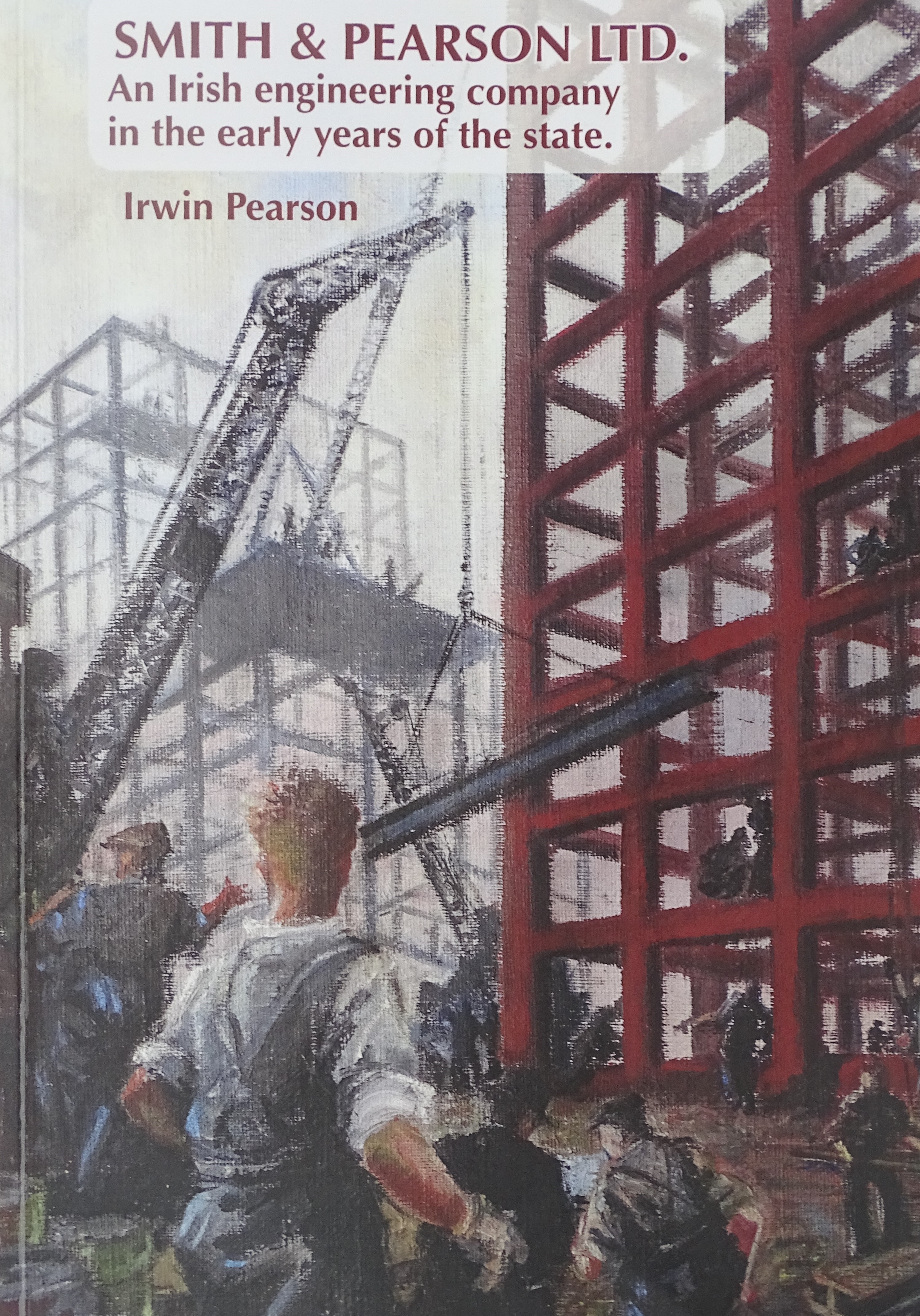
Smith and Pearson Ltd.  An Irish engineering company in the early years of the State

The Friends Historical Committee’s most recent publication, Irwin Pearson’s account of the family firm of Smith and Pearson: Smith and Pearson Ltd.  An Irish engineering company in the early years of the State, tells the story of a firm whose name became almost a household word.

Founded at the beginning of the 20th century by the North of England Quaker John Biglands Pearson, the company initially produced agricultural buildings, gates and fences, but went on to become contractors for structural steel for power plants and other major building projects. In the 1950s they added a division for steel windows which they supplied to the American Embassy, RTE and many private homes. During the second World War steel became unavailable in the Free State, but the British Admiralty gave the company a contract to supply landing craft – an unusual commission for a Quaker firm. Smith and Pearson opened a shipyard at Warrenpoint and the first craft was completed in record time, but this was already too late for the D-day landings. Like many family-owned businesses, Smith and Pearson fell victim to the changes of the 1970s.

This intriguing personal account is available from the Friends Historical Library, Stocking Lane, Rathfarnham, Dublin 16 at €15 (postage included). 

You can contact library@quakers.ie regarding orders also.

Update from Brummana High School, July 2021

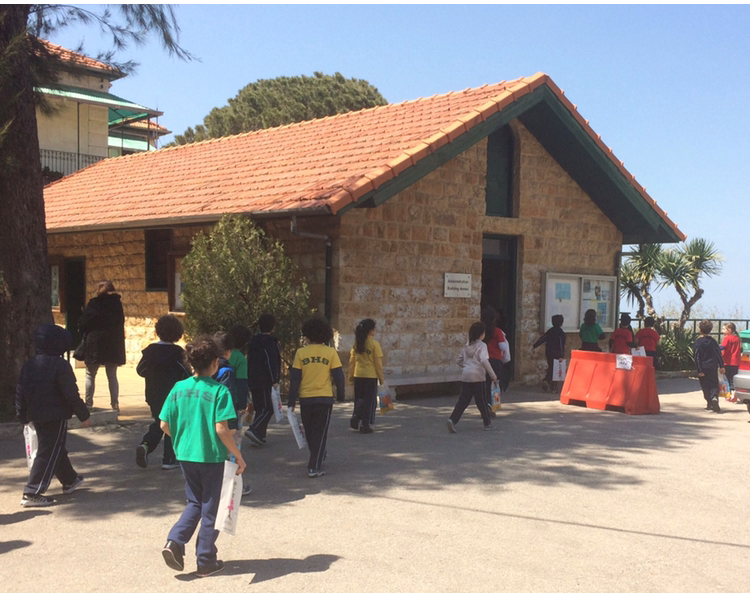
Brummana High School, Lebanon.

At its Annual Meeting, Friends in the European and Middle Eastern Section of FWCC were very moved by the powerful presentation about Friends in the Lebanon, and about Brummana High School, given by Sami Cortas, Clerk of Brummana Meeting – known to Irish Friends – and David Gray, the school’s Principal. 

Founded in 1873, with Irish Friends at times on its staff, it has long been a beacon of light in times of perennial crisis in the country, attracting students of all faiths and background. This diversity and its promotion of tolerance and peaceful resolution have been central to its academic excellence and pastoral compassion. Principal David Gray emphasises that these Quaker values continue to guide its response to the struggles today and its pivotal importance for the future of an ailing country.

David writes, “The August the 4th explosion in Beirut, which ripped out the heart of the city, rendered 300,000 people homeless and killed and maimed thousands, brought to the attention of the world a country which was floundering amidst a sea of troubles. Little Lebanon, surrounded by war torn and impoverished Syria, from which it has received over a million refugees, and Israel, did not have its problems to seek.

In the past 12 months the Lebanese Lira has lost 90% of its value, inflation is rampant, unemployment runs at 50% and 60% of the population lives below the poverty line. And of course, COVID-19, which has raged out of control in a country which has operated without a government for over a year, has taken its toll on a weary, exhausted, and despairing people. Businesses have closed, schools are physically closed, and those who have had the capacity to leave the country have done so for a better life elsewhere.

Yet Lebanon is a beautiful place and a jewel in the Middle Eastern crown, once the home of Middle Eastern banking and free enterprise and still a champion of education as a means to prosperity and to success. At the centre of this jewel lies Brummana High School.

Today it is running a comprehensive education and welfare programme online for its 1250 strong population, aged three to 18, continuing to promote its Quaker values and striving to provide for its families who have been hit hard by all of Lebanon’s woes, through its beleaguered, financial aid scheme.”

Senior BHS students have also commented in recent weeks. Head Prefect Kelly Kanaan emphasised how, despite extremes challenges, “BHS has navigated the world of online education this year, generated successful student-led projects (in April the online Model United Nations Conference hosted 170 student delegates from six countries and 26 schools) and built international bonds and relationships with students abroad.” Yet, as Francesco Jarjoura, Student Council President, said, “Help is now needed to support the school families struggling due to the multiple crises.”

The projected school shortfall this year is £750,000. In July, the Quaker International Education Trust will be running a campaign to raise money to support. Last year QuIET raised £30,000 from its summer appeal. this year we need to double that. An Appeal is going out in The Friend, and brochures distributed. Please think about how you or your Meeting can assist the school by making a donation which will, however small, help to save the education of a child whose future depends on your generosity and who will, through the Quaker education provided, be able to begin to mend the broken society which is so desperately evident in the country today. Without your support, many children who could do much will miss out and flounder where otherwise they might flourish.

If you want to donate now, click here to visit the donations page on Brummana High School’s website or you can visit the QuIET donation page on Just Giving.

Quaker Service Features in Scope NI Magazine

Scope Northern Ireland magazine has published an interesting article about the work of Quaker Service and the appointment of its new Chief Executive Shane Whelehan.

The article, which is titled ‘Friends To All: The Remarkable Story of the Quakers in Ireland’, also includes a brief historical overview of The Religious Society of Friends in Ireland.

You can read the article in full on the Scope Northern Ireland website.

You can see the Quaker Service website here.

EcoQuakers Letter re EU-Canada Trade Agreement

EcoQuakers Ireland sent the following letter to Irish newspapers in May 2021. It was published in The Irish Times and The Irish Examiner:

Sir, – The Religious Society of Friends in Ireland has great concern regarding the Ceta (EU-Canada Comprehensive Economic and Trade Agreement) trade agreement. The ISDS clause (investor-state dispute settlement) element of the agreement would allow foreign investors to sue a nation state for amending legislation that would infringe on corporate profits. The tribunals in which the ISDS process is adjudicated are a private procedure, without any system of appeals, in which the potential lost profits are the central subject of focus.

The EU intends to update this process by making it public and calling it the investor court system (ICS). In the ICS, however, the tribunal can still be held in private if the investors insist, thus calling this a “court” is misleading. A court of law would balance the lost profits against the public good, but the ICS will not. It is worth noting that 90 per cent of the largest recent ISDS suits have amounted to more than $1 billion each and have been taken by fossil fuel and mining industries against countries that have endeavoured to make moves towards a more sustainable future.

Quakers hold that we are all equal, and that sustainability and care for God’s creation is of vital importance for our common future. We view that the creation of a separate court system for corporations, where profits are seen to be more important than the wellbeing of a nation’s children, is incompatible with Christ’s teachings, and the ISDS element within international trade agreements is morally indefensible.

By contrast we hold the vision for a better future that allows for the evolution of national legislation to help create a more equitable, sustainable and beautiful world, where both trade and international cooperation are founded on a firm base of mutual respect and care. As such we must drop the ISDS clause from Ceta and other international agreements. – Yours, etc,

BRÍAN Ó SÚILLEABHÁIN,

EcoQuakers Ireland

A Friendly Podcast!

COMING SOON! A new podcast series made by Irish Young Friends exploring the voices and sounds that make Ireland Yearly Meeting what it is today.

These Young Friends would love to hear from Friends (of all ages) who would be interested in helping produce future episodes, or who would like to contribute or suggest potential interviewees.

To find out more, or to be put in touch with the podcast team, please email office@quakers.ie

We look forward to hearing from anyone interested in contributing to this exciting new venture!

A personal account of Ireland Yearly Meeting, 8th – 11th April 2021

The main theme of this year’s Ireland Yearly Meeting (IYM) was ‘A Time to Act Together in Faith and Hope’.

A wide range of subjects was explored during the online gathering, from peace and resurrection to sustainability, advocacy on contemporary Quaker concerns, and the positive and negative aspect of new technological innovations. There were illuminating reports given on the good work of Quaker Service in Northern Ireland and on the projects supported in Ireland and in other countries by Irish Quaker Faith in Action (IQFA).

Friends differ in their views on the kind of ‘God’ we should place our faith in but we could, at least, confidently put our faith in the new ‘Zoom-world’ … or could we?

The Special Interest Groups held in advance of the historic online IYM, were stimulating, rewarding and technically very successful. The new ‘Zoom-world’ seemed to working fine in our home in the countryside.  All was going smoothly. 

On Thursday afternoon, however, on the eve of the main programme, a large delivery lorry brought furniture, and disaster, by pulling down our broadband cable from the skies. Having agreed to report on Yearly Meeting, my heart sank like that cable, and we had a new kind of Covid isolation.

In the magical ‘Zoom-world’ though, miracles do happen. A temporary hub was promised the next morning and BT engineers would later arrive to climb poles, fix cables, and re-connect us promptly.  I was disappointed to miss the Ministry and Oversight session on Thursday evening but was really looking forward to re-connecting for the sessions on Faith in Action and Connecting with our Neighbours on Friday.

The BT technical stars amazingly arrived on Friday morning and had ‘fixed it but not quite fixed it’. Sadly, the engineer for the telegraph poles, who had come and gone, needed to return again the next day. Our faith and hope were tested.

We listened to the Public Lecture on my mobile phone that evening. Eoin Stephenson of Limerick Meeting was once a Trappist monk at Mount Melleray Abbey. Now a Quaker with a family, he spoke on the topic ‘Resurrection and Personality’ and posed the challenging question: ‘Can we cope with the resurrection?’.  His considered, engaging delivery and lucid presentation made his personal interpretation of this question, and his response to it, very accessible.  

Eoin used vivid images and measured words in his interpretation of the different biblical references to the resurrection and wore his considerable learning lightly. He described the experience of encounter, recognition and presence in an individual as elements of resurrection in our lives and went on to say that, “for some it is a clear moment of explicit recognition. For others, recognition grows slowly over time into a sense of personal presence”.

Eoin described his ideal of a healthy ‘whole personality’. He said that individuals could have a closed or open personality and spoke of fear and anger closing down the open personality. Having an open personality was essential, he felt, for responding to resurrection and living as fully as we can.

Other resonant ideas and phrases still echo for me: ‘Do we embrace life as it unfolds in all its challenging newness, or do we stand with the certainties we have established in our lives?’ and ‘The love that brought us into existence will hold us in death so that we share in this new life.’

Eoin related his ideas on resurrection and personality to his religious experience as a Friend. Silent Meeting for Worship, he said, was a ‘place of encounter with Divine Presence’ and ‘in this encounter our personality grows.’

We were operational again in time for Session 3 on Peace and Social Justice.It was a most revealing session for many Friends. We heard about the Campaign to Stop Killer Robots. It illuminated a frightening innovation in warfare: the development of fully autonomous weapons.  Clare Conboy Stevenson, of the campaign, talked about concerns, such as flaws in facial recognition being accurate on all ethnic groups, and explained her fear that moral judgements that should reside in human beings would be delegated to robots.  Leading powers are presently devoting millions to these weapons. Quakers were urged to support the international campaign to ban their use that now includes 66 countries, and this was recorded in the final epistle of IYM. IYM also agreed to sign an interfaith statement against killer robots “A Plea for Preserving our Shared Humanity”.

We also heard in this session about the ‘Stop Fuelling War’ campaign. This French lobbying charity, set up in 2017, aims to raise awareness of the arms trade in France and to oppose one of the largest arms fairs in the world, Eurosatory, which is held every two years in Paris. Karen King talked about how the campaign lobbies to re-direct the huge amount of money and jobs tied up in this industry into alternative uses, such as peace building and prevention, and sustainable industries. The words ‘defence’ and ‘security’ need a complete re-think and a new approach. I was glad to hear Karen stress the importance of addressing the causes of conflict, which, though complex, are often fuelled by poverty, deprivation and feelings of abandonment and hopelessness. The present troubles locally on the streets of East Belfast offer proof of what happens when this is not done.

A particular highlight for me was the session on Sustainability.  Four Friends spoke from the heart about their personal experiences of working for sustainability.  A young Friend, Kate Harty, spoke passionately about the campaign, Fridays for Future.  She has found a caring community in this activist group.  I liked the idea of the mental health check-in system they use online, selecting a coloured digital heart to indicate how they are feeling.

Kate Fletcher shared some of the challenges she has faced in working on environmental issues over the years.   She said that the environmental crisis is fundamentally a spiritual one and spoke about the importance of maintaining hope.  She said that hope was the decision not to give up when faced with the learned helplessness of despair, but to keep going anyway. 

Brian O’Suilleabhain said that there was hope for the future in that more people are beginning to say, “yes”.  People may not know what to do, but know they must do something.  They may not know what to say, but know that they must say something.  He asked, “What canst thou say?”

Oliver Robertson of Britain Yearly Meeting spoke lucidly and thoughtfully.  He said that we bring the whole of ourselves to our closest relationships and wondered what it would be like if we brought all parts of our selves to caring for the environment.  He maintained that we need people at every step of the journey towards living sustainably, so that we can see what comes next. 

The session was peppered with interesting statistics; we learnt that the US military produces more CO2 emissions than some countries.  There was advice to lobby politicians and a reminder not to forget the importance of civil servants and party members. There was also a welcome dose of optimism. We were told ‘there is nothing so energizing as doing something’, asked to counteract a resignation that the problems are too overwhelming, and recognise that ‘times are changing’.

Friends at IYM always look forward to the report from Young Friends and this year, as ever, it filled us with inspiration and hope.

The Sunday session allowed time for Friends to reflect on IYM and on the benefits and drawbacks of meeting online.  There was discussion about how Friends could use their experience of this way of doing things in the future.

I missed meeting in person, but still felt that strong sense of belonging, identity and community that IYM always represents for participants. Seeing and hearing old friends lifted my spirits again.

And the promised ‘next morning’ mini-hub that could provide instant internet access to IYM for us?  It eventually arrived on the Monday after Yearly Meeting! We live in faith and hope.

Rachel Kirk-Smith, South Belfast Meeting