EcoQuakers Ireland have made the following submission to the public consultation on plans for how Ireland should adapt to climate change. This is the first phase of consultation which will eventually result in the first National Climate Change Adaptation Framework by the end of 2017.
Submission to Climate Change Adaptation Framework
EcoQuakers Ireland, a Committee of the Religious Society of Friends (Quakers) in Ireland, has two outstanding concerns to bring to the consultation:
- We are called to respond to vulnerabilities in our communities to the increasing effects of climate change. What is needed is nothing less than a transformation in how government responds. We believe the next Framework should contain specific actions to help local communities to understand what is happening, to make decisions, and to take actions to adapt to climate change, rather than to experience climate change as helpless victims of climate events. Communities must be enabled to:
- engage creatively with how they can respond to climate change;
- build networks that can inform government decisions; and,
- design and engage in efforts to prevent potential conflict around climate change impacts.
This is only possible in communities that are resilient. Resilience must be actively nurtured where it is present and developed in communities where it is lacking. We believe community resilience should be an overarching theme in the next Framework.
2. It is nonsense to set adaptation/mitigation policies towards 2050 carbon reduction targets without working to specific and measurable milestones. We need a clear map. It follows that to become a zero carbon nation, mitigation and adaptation mechanisms are required across all sectors, without derogation.
As Quakers, we are called to work for the peaceable Kingdom of God on the whole Earth, in right sharing with all peoples. We recognise a moral duty to cherish our planet, not only for our own sake, but for the millions of people in developing countries already affected by climate change, and for the sake of future generations. As we build sustainability in our Quaker communities, we hope to be part of the change in our local communities to become places of mutual support, collaboration, challenge, laughter and celebration.
Thank you for taking our views into consideration.
~ EcoQuakers Ireland



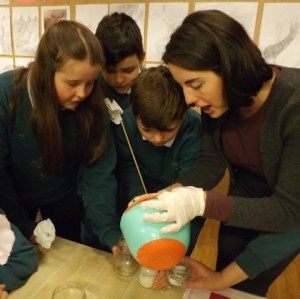
 “The initiative of the white poppy began in Britain in 1933 by a women’s pacifist group as a symbol of peace and non-violence. This symbol is widely used among Quakers in Britain and also in Ireland.
 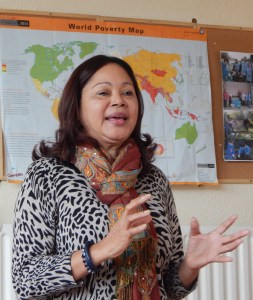 Maria Genao, who undertook a speaking tour of Ireland to mark Fairtrade Fortnight, said that the impact that Fairtrade had on the lives of small producers were many. “It ensures our work as producers by protecting the market throughout the year, by helping us in many ways to keep growing and by being there through tough times when we are in need,” she said.
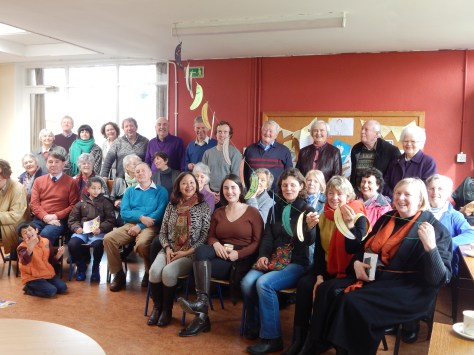 Rathfarnham Friends were pleased to be joined by Friends from other Meetings – adults and children – to hear their special speaker.
 quakers-in-ireland.ie
You must be logged in to post a comment.