Category Archives: News and Events

Leinster Quarterly Meeting, 24th June

Leinster Quarterly Meeting will take place in Enniscorthy on Saturday 24th June.

Following meeting for worship at 11am, there will be a business session.

Following packed lunch there will be a worship sharing session with the theme of forgiveness.

The day will conclude with the famous Enniscorthy tea with strawberries and cream and home-made cakes!

‘Wear a Bonnet – Living Art Installation’

Wear a Bonnet – Living Art Installation’

Christina Henri’s successful Living Art Installation,

part of ‘Roses from the Heart’

comes from Tasmania to Ireland at Grangegorman, DIT. (An Croi)

                                 on  FRIDAY, 3rd MARCH 2017, 10.30am

All are welcome and are invited to wear a Roses from the Heart’ cloth bonnet that will be provided on loan.

This bonnet will symbolise the life of one of the 3,216 Irish women and their 506 children held at the Grangegorman Female Depot (1840-1852) prior to transportaton to Tasmania. (http:// rosesfromtheheart.tumblr.com)

The installation will also pay tribute to Quaker social reformer, Elizabeth Fry, first woman to campaign for better prison conditions. Grangegorman Female Depot (now the Grangegorman Development Authority) opened in 1836. It was the first female penitentiary in the then Britsh Isles that was built according to Quaker prison reformer, Elizabeth Fry’s precepts. She was also instrumental in the placement of Mrs Marian Rawlins as matron.

an-croi-grangegormanTime: Arrive at An Croi prior to 10.30am in readiness for receiving loaned bonnet to be ready for aerial photograph. RTE Nationwide has committed to a second documentary on the ‘Roses from the Heart’ journey and will film the 3 March event at Grangegorman.

Artist Dr Christna Henri will attend, as will the Mayor of Dublin and the Australian Ambassador to Ireland along with other dignatories.

Students from all local Dublin schools are invited to attend the event,  as are pupils from the Quaker Schools, Newtown, Waterford, Rathgar Junior School, Dublin, and Friends’ School Lisburn.

Christina’s Irish visit will include a visit to Waterford from 13th-19th March. She will give two public lectures, in Waterford and Dungarvan, some workshops to Waterford women’s groups and at both Newtown School and Newtown Junior School.

 For further information email Joan Johnson (Waterford Quaker Meeting) at rogerjoan5@gmail.com


New Year, new beginnings – ‘The Transforming Power of Holy Obedience’

Most New Year resolutions focus on getting fit, losing weight etc. – goals to improve our physical and mental well-being. This is all very laudable but there’s no reason why some of our New Year resolutions shouldn’t have the purpose of improving our spiritual lives too.

From the very earliest days in Quaker history Friends have spoken clearly of how the reality of the presence of the living inward Christ gives us hope and purpose and a sense of the peace that passes all understanding.

Do we have a strong sense of the presence of the living inward Christ? Or are there steps we can take to help us feel a greater sense of the hope and purpose of Jesus Christ?

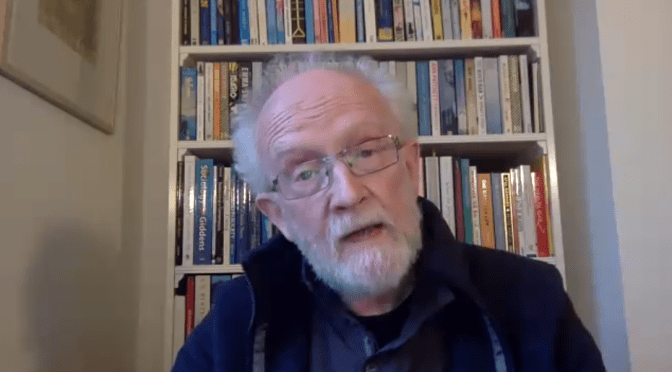
Simon C Lamb, Clerk of FWCC

Simon Lamb, Clerk of the Friends World Committee for Consultation and a Member of Richill Meeting, gave a talk on the theme, The Transforming Power of Holy Obedience, in La Paz, Bolivia, in 2014. The talk makes ideal reading at the start of 2017 as we seek to prioritise and plan ahead for the coming year.

Simon says that, when George Fox challenged us to ‘Let our lives preach’, he was challenging us to live lives of wholeness, where our actions and the principles we believe in are the same. “And if our day to day existence becomes a living expression of integrity, then our neighbours and our friends, that we come in contact with, will see that the God we love is real, not because we tell them so, but because they see the transformation that our relationship with God has created in us. Our God is a God of changed lives,” he says.

You can read the full text of Simon’s talk here >> The Transforming Power of Holy Obedience


‘Experiment with Light’ – Friends share their experiences

sunlight‘Experiment with Light’ is a method for actively engaging with the silent worship practised in Quaker Meetings, inspired by early Friends’ experiences, as illustrated by their writings. It was originally devised by the British Quaker Rex Ambler, and has since been continued and developed in various Quaker study centres and Quaker Meetings.

An ‘Experiment with Light’ workshop was held at Ennismore Retreat Centre and Cork Meeting House from 11th – 13th November 2016. The workshop provided an introduction to this practice, as interpreted by the two facilitators – John Spencer of Rochester Meeting in West Kent and Medhina of Lewes Meeting in Sussex. A number of Cork Friends organised and supported the workshop, which had 18 participants from 7 Meetings and Worship Groups within IYM. Below are impressions from 5 of these participants.
On arriving at Richard and Denise’s house on Friday evening, we were greeted by a lovely group of people. We had a wonderful meal, and this was a great opportunity to meet everyone. That evening, at our first session in the retreat centre, we had a good introduction into the practice.

On Saturday, we moved into the second session, “Experiment with Light based on the individual”. After preparing us for the session, Medhina guided us through a meditation, taking time between each step for us to sit in silence. The meditation was aimed at helping us to focus on the concerns in our lives, and it was wonderful to feel the warm energy moving between us. A strong bond formed between us – people seemed to rejoice in each other’s company. I liked the part when we moved into small groups and put on paper by writing and drawing what was happening inside ourselves. This opened up some deep discussions between us.

In the Session 3, we moved into group concerns. This felt quite different – in the individual session, we all seemed to be deeply involved with our own issues, whilst still being totally there for each other – the energy was very alive and full of colour. In the group session, it felt like we were on a different level, as if we were connected in a stronger way. The individual session was truly “Experiment with Light”, but in the group session, it felt as if we were now “dwelling in the Light” – there was a peace among us, a “presence of the Spirit”. Several people talked afterwards about how relaxed and at ease they felt, so much so that one or two felt sleepy; “resting in the safety of the Spirit” was how it felt to me.
John dressed up like George Fox in Session 4. This was so well done, and people reacted in a very natural way – our problems of today being so relevant to the solutions of George Fox. Some good “rants” developed.

On Sunday we had our closing sessions, ending with some great yoga exercises with Lu. A high point of Sunday was the course participants getting together with Cork Quakers for Meeting for Worship at 11.00. After lunch (lovely soup), we drove home to Glengariff.

I am now looking forward to the fruits of our course – hopefully some “Light Groups” will be established soon.
— Patrick Goyvaerts (Bantry Worship Group)
I was very happy to attend the “Experiment with Light” weekend in Cork. It began with a well organized and tasty meal, prepared by Richard at his and Denise’s house. This was a lovely way for us all to meet and get to know each other. We then traveled to the Retreat Centre for a short introductory session.

On Sunday, we wound up the workshop at the Cork Meeting House and joined Cork Friends for Meeting for Worship.

The weekend was well organized, the tutors were clear, honest and warm-hearted, and Denise as Elder was a steadying and reassuring presence.

I personally only got faint glimmers of illumination, but I am excited about the process. For me, it represents the essence of Quakerism, because it teaches us to discover and respond to the Light within. I feel encouraged by my faint glimmers and will continue to work with it. I am hoping to form a local Light Group.

— Sarah Goyvaerts (Bantry Worship Group)
As a recent addition to the Religious Society of Friends, with over 4 years as an Attender in Monkstown, I delighted in the recent weekend “Experiment with Light” in Cork this November.

I believe instinct to be a main driving force in my understanding of Meeting for . I atteip right from the first day I arrived at MonkstnWorshownded my first Yearly Meeting in Cork in 2013, and upon reading the programme for that weekend, the workshop by Rex Ambler struck me as something of interest. Having attended the workshop then, I knew that I was coming to something that would be helpful in the future. But I knew not what.

In was suggested that my first meeting in Monkstown in June 2012 was a Homecoming. I now can saw with safety that I agree with that notion. The weekend this November on “Experiment with Light” is like an extension of that Homecoming. Another door has been opened on the same ground, but I sense now more on a fertile plain. It appears that the early Quakers found a direct way to God, and I believe that way is available to every Friend in Meeting for Worship. I believe that this can strengthen that link for me. I am finding this almost accidentally and by instinct.

What I know is little, but what I feel is immense! I encourage those who are curious to delve into this process, “Experiment with Light”, to see if it is for them. I sense that it could be a way forward for me, but I need to practice and require more time to pronounce with certainty as to its long term benefits. — Conor Hayes (Monkstown Meeting)

I was delighted for this opportunity to experience the method developed by Rex Ambler from his research on the writings of George Fox and other early Friends. I enjoyed the fellowship and the time spent with Friends from throughout Ireland Yearly Meeting. I hope that we will have further opportunities to practice the method and speak of our experiences in what has proved to be a powerful learning environment. While there was an emphasis on individual experience of settling down and centering, there was also a challenge to reconnect with the energy and passion of early Friends, in relation to our Meetings and to the Society as a whole. I believe that we will all continue to use the method and hopefully we will be able to share our learnings with those interested Friends in our Meetings who could not get to Cork on this occasion.

It was great to see that the invitation extended to the Amblers to bring the experiment with Light to Yearly Meeting in Cork 2013 had resulted in this workshop organised by Denise Gabuzda, making me anticipate what may emerge from Limerick’s experience of hosting YM in 2018.
— Pauline Goggin (Limerick Meeting)
This was for me an amazing week-end! Because I had heard Rex Ambler talk to us at our IYM held in Cork about the early Quaker understanding of “inner light”, I expected great things from this week-end. In fact, it exceeded my expectations.

Also, I felt that each of us participating was caught up in a feeling that something special was in the air. Maybe it could be called a “gathered” week-end? We owe a deep debt of gratitude to Denise Gabuzda and Cork Friends for making it all possible and the two British Friends who facilitated.

As I write this report two weeks later, I can now better put words on the something very special that this week-end was, for me. Up to this I have found myself, much too often, explaining Quakerism to others, in terms of what it doesn’t have, rarely in terms of what it does have! And yet I know that this is crazy! Something very special must have happened to enable George Fox and early Friends, a group of ordinary people with no pretensions to any specialized knowledge of spiritual matters or social issues to, first of all, do the hardest of all human tasks – change their own hearts – and then have the courage to go forth and seek to change the world! This week-end threw light for me on what this something special was and from now on this new understanding will be central to what I say to others about what Quakerism is.

Over our week-end, through various in-puts and exercises, all was clarified through a special understanding of an ordinary word – LIGHT.

When light isn’t just the electric light that I can turn on with a switch but a light deep within me that I, alone, am incapable of turning on but must let God’s inner spirit do the turning on – then, in the very simple but very profound words of Fox, “what can be known of God, is revealed within you”. Incredible! That put an end to all the big tomes of Christian theology and brought us much closer to the simple parables of Jesus.

In this light all personal and global problems can find new understanding. In this light early Quakers had the courage to sally forth and they dared to change the world.

Next time I am asked what is Quakerism, I am going to try to put this new understanding of Light into a simple but wonderfully positive sentence. Can any Friends help me?

— Irene Ni Mhaille (Monkstown Meeting)

This piece was originally published in the January – February 2017 edition of ‘The Friendly Word’.

Commemorating 1916: Making White Poppies

1There were two major events during 1916 in Ireland. The first was the Easter Rising, a rebellion against British imperial rule. The second was the battle of the Somme in which 5thousands of individuals from this island were killed and injured in a war caused by German and British conflict. This indicates an area of uncertainty and confusion in Irish 4cultural self-perception, different from that of other countries engaged in the 1914-18 war.

Dublin Monthly Meeting Peace Committee sought 6a means of commemorating the individual worth everyone injured or killed in violence, with particular focus on the Somme and the Easter Rising.

On 19th 3November we set up a small marquee in one of the main public parklands in Dublin – Merrion Square. We invited anyone walking by to come and make a white poppy, then 8to plant it. 101 poppies were planted during the initiative, which took place the day after the 100-year anniversary of the end of the battle of the Somme (18th November 1916).

11During the day we had readings in French, English and the original and powerful text of All Quiet on the Western Front. There was also a poem in French by Louis Aragon. We ended the day by 9formally laying down each poppy, then standing in a circle around them and reading the 1661 Peace Testimony. We then finished with a couple of minutes’ 10silent worship.

This event was deeply emotional for many people whose grandparents had been in the Somme. It created a sense of shared concern – everyone had the same intention and similar recollections. A public event in which each participated for the same purpose gave collective strength to each person.

Rathangan Burial Ground ‘beautifully restored’ by local Tidy Towns


after-cleaning-of-headstonesIn the 18th and 19th centuries many Irish country towns had a significant Quaker community, often involved in milling and other local industry. Rathangan Meeting was established in 1728 and laid down in 1918.

By 1960 the small meeting house was a ruin but it has since been converted into a garage.

The last interment in the adjacent burial ground was in 1909.

before-cleaning-of-headstonesTotally neglected and overgrown with trees and brambles, it was taken in hand by the local Tidy Towns some years ago and has been beautifully restored and is now both a wonderful enclosed space in the town and a reminder of the importance of the town’s Quaker heritage.

A small number of headstones survive but, with the assistance of the Quaker Historical Library Dublin, it has been possible to establish the names of those buried there and these names are now recorded on limestone tablets attached to the walls.

This last has been possible thanks to generous local contributions and to help from the Historical Library and Dublin Monthly Meeting.

Rathangan is 6 miles North West of Kildare Town.  The Burial Ground is at the south-east corner of the village where the R414 takes a sharp left turn towards the north.

Enough is Plenty – Reclaiming the Common Good

Enough is Plenty – Reclaiming the Common Good’ was the theme of an event that took place in the Agápē Centre (South Belfast Methodists) on 24 September 2016. The event was jointly hosted by the Methodist congregation and South Belfast Quaker Meeting. 

Tony WeekesMany thanks to Tony Weekes of South Belfast Quaker Meeting for sending us the following report:

‘Enough is Plenty’ is the title of an event which took place at the Agápē Centre (South Belfast Methodists) on the afternoon of Saturday 24 September. It explored what makes for a society where ‘enough is plenty’ – addressing contemporary moral, economic and theological issues in our affluent and waste-prone society.

The theme and content was inspired by the Joy in Enough movement: a challenge to Christians in Britain, and an invitation to all people of good will, to join in building a just economy within the ecological limits of the Earth. The title – Enough is Plenty – was taken from a book by Anne Ryan, a writer, educator and community activist from Co Kildare, and a former member of the academic staff in Maynooth University.

Anne Ryan’s contribution:

enough-is-plentyAnne was the principal speaker at the event. Her contribution began by offering an interpretation of Enough: a platform for talking, thinking and acting about the kind of world we would like to live in; Enough as a shorthand for an ecological, moral, love, care, aesthetic world view, bringing together ecology, economics and ethics.

She reminded us that Enough has a good history; it is rooted in past generations and has been valued and practised by several great wisdom traditions.  The concept is founded on a belief that humans have the inherent capacity to be cooperative and participative, to share resources and to devise an inclusive social economy and forms of work that foster these capacities and care for the planet.

It brings in the ideas and values of diversity: what we refer to as ‘work’ is much more than paid employment; the need to develop talents for the benefit of all; using the many possible ways of making decisions.

She continued by reminding us that there is a necessary role for responsive government, but that this is a two-way process.  We must seek to challenge the views of the dominant media and politics; we must challenge the obsession that public policy is about a return to ‘business as usual’.

It was a rich and eloquent contribution, and impossible to summarise in a few words. To end this very partial summary I offer the following quote from Anne’s aide-memoire:

Enough is a key concept for the future because it is living, adaptive and dynamic; the future is uncertain, we don’t know the precise things we are going to require. Evidence is past-based – not always suitable for the future. The form of the ecological economy is not to be determined in advance – we don’t really know what it would look like

Enough is a call to action and a practical set of ideas, not solely an intellectual or abstract concept … It is about engagement rather than transcendence – there is no fixed end point, we make the road by walking – of course, there is a risk in entering this space of enough – we don’t know what it will look like. Enough is not an objective but a way of life – there is no end state.”

Tony Weekes’ contribution (a former academic economist’s repentance!):

The second presentation was given by me; I took as my title We need a Society, not an Economy. My primary intention was to remind the participants that the purpose of ‘the economy’ is to serve the needs of society (subject to respect for environmental limits and ecological services) – not the other way round.

It was inspired (as is much of my thinking and writing) by Schumacher’s book Small is Beautiful. I also took inspiration from several recent speeches by President Michael D Higgins and from the writings of a long-time dissenting economist Manfred Max-Neef.  Max-Neef was once a conventional academic economist. Confronted – some time ago – by a poor man in rural South America, he realised that his academic learning had nothing to say to the plight of this man and his family.  He now refers to himself as a ‘bare-foot economist’, and is an eloquent (and, in academic circles, neglected) advocate for a different kind of economics.

I focussed particularly on his view that there are nine basic human needs, all of which have an impact on ‘the economy’.  At first sight, this impact is not apparent; for example, he identifies ‘affection’ as one of these basic human needs.  What, the sceptic will ask, does this have to do with ‘the economy’? Plenty, I suggest – affection requires economic stability. Uncertain and unstable employment creates poverty, indebtedness and stress.  Outcomes which create an environment which fosters affection, between people in close personal relationships or other, wider relationships.

Another need is participation – a concept to which Anne referred. That too requires relief from the notion of ‘hard work’ so often used by our politicians as the only ‘marker’ for contribution to the economy.

In a few words: our needs are more than shopping.  I left it as a discussion topic for the participants to unpack this further.

James Orr’s contribution

The final presentation was provided by James Orr, director of Friends of the Earth in Northern Ireland.

meadowJames offered the title Social Ecology and the Power of Creative Dissent. He showed us, with excellent images, examples of non-violent (‘playful and creative’, in his own words) protests about many aspects of public policy and corporate behaviour. But he also emphasised the need to make it known in the public arena what we do need from government, business and agriculture: energy and food security; action to address the consequences of climate change.  And more.

James closed, leaving us with three words on which to reflect: Reconciliation, Ecology (not ‘the environment’!) and Cooperation  … and a wonderful image of a wild flower meadow.

The overall form of the event

We began at about 2pm and ended around 5.30, with a short break for tea.

Each contribution was followed by around 20 minutes for participative discussion in small groups.  The three main speakers moved around to help, when asked, these conversations.

There were around 40 participants.  David Campton, the resident Methodist minister, did an excellent job as moderator, with good humour and a sharing of his own insights into the issues we are discussing.

It was sponsored and promoted by South Belfast Methodists and South Belfast Quaker Meeting


Notes:

The Joy in Enough movement: http://www.greenchristian.org.uk/joy-in-enough/

Anne Ryan’s book Enough is Plenty is published by O Books. ISBN: 978-1-84694-239-6.

Speeches on economic issues by President Michael D Higgins: the text of the one I quoted is at http://www.president.ie/en/diary/details/president-gives-the-opening-address-at-the-7th-annual-tasc-conference.

Manfred Max-Neef on Human Needs: a paper on these and their implications can be found at http://www.rainforestinfo.org.au/background/maxneef.htm

Tony Weekes may be contacted at tony.weekes@gn.apc.org. 

National Famine Commemoration Ceremony

rachel-bewley-batemanThe National Famine Commemoration Ceremony 2016 was held in Glasnevin Cemetery on Sunday 11th September.

The Religious Society of Friends was represented at the event by Rachel M Bewley-Bateman, Dublin Monthly Meeting Clerk and Member of Churchtown Meeting.

celtic-crossPresident Michael D. Higgins spoke eloquently about the tragic events in Ireland in the 1840s and unveiled a new Celtic cross in memory of those who died at that time.  It is situated just to the right of the chapel.

22,000 of the one million famine victims are recorded as being buried in Glasnevin.

Rachel M Bewley-Bateman’s great, great uncle Joseph Bewley (who died in 1851) was Joint Secretary of the Friends Famine Relief Committee along with Jonothan Pim, who later became an MP.

Rachel wrote the following prayer, which she shared at the commemoration:

As we remember all those who suffered, died, or were forced to emigrate during the Great Irish Famine of the 1840s  –

Let us remember also those around the world today who are without adequate food, water and shelter, for whatever reason.

Let us consider some of the possible causes of such disasters – dependence on a single crop, poverty and neglect, inequitable land and water distribution, selfishness and greed, abuse of power, climate change, inadequate care for our fellow human beings and our planet.

Let us also give thanks for those who have given and continue to give their lives in the service of others.

May we be given the vision, strength and generosity of spirit to help, in whatever way we can, to alleviate current and future suffering.